The Art of Making the Impossible
Topic:
Creativity / VFX
Year:
15 Oct 2026
When the Idea Doesn’t Exist Yet
On building universes, distorting reality, and thinking about VFX before they become VFX.
There is a moment in the creative process when an idea has yet to take shape. It exists as an imprecise image, a feeling, or an association that seems to hold something interesting. Sometimes it is an absurd situation; other times, an image that shouldn’t work in the real world, yet is difficult to imagine any other way.
That is precisely where I’m most interested in working.
In advertising, we often receive an idea with an established structure and begin thinking about how to bring it to the screen. However, some of the most exciting work happens earlier, when we are still discovering what the idea is, what kind of universe it needs, and how far we can take it.
It’s not just about figuring out how to produce something, but about helping shape what is worth producing in the first place.
First, the Universe
When I think about a piece, I rarely start with the technique. I start with the rules that govern the small world we are about to create.
What if an everyday object behaved in an impossible way? What if a familiar space stopped obeying the laws we know? What if an extraordinary image appeared in an ordinary setting, without anyone seeming surprised?
I’m drawn to situations where something unreal enters reality without needing an explanation. Images with their own internal logic, even when they defy any logic we recognize.
Building these universes requires making decisions from the very beginning. Imagining a striking image isn’t enough; we need to understand how it works, what makes it believable, and what elements are necessary to sustain it.
VFX Starts Before the Shoot
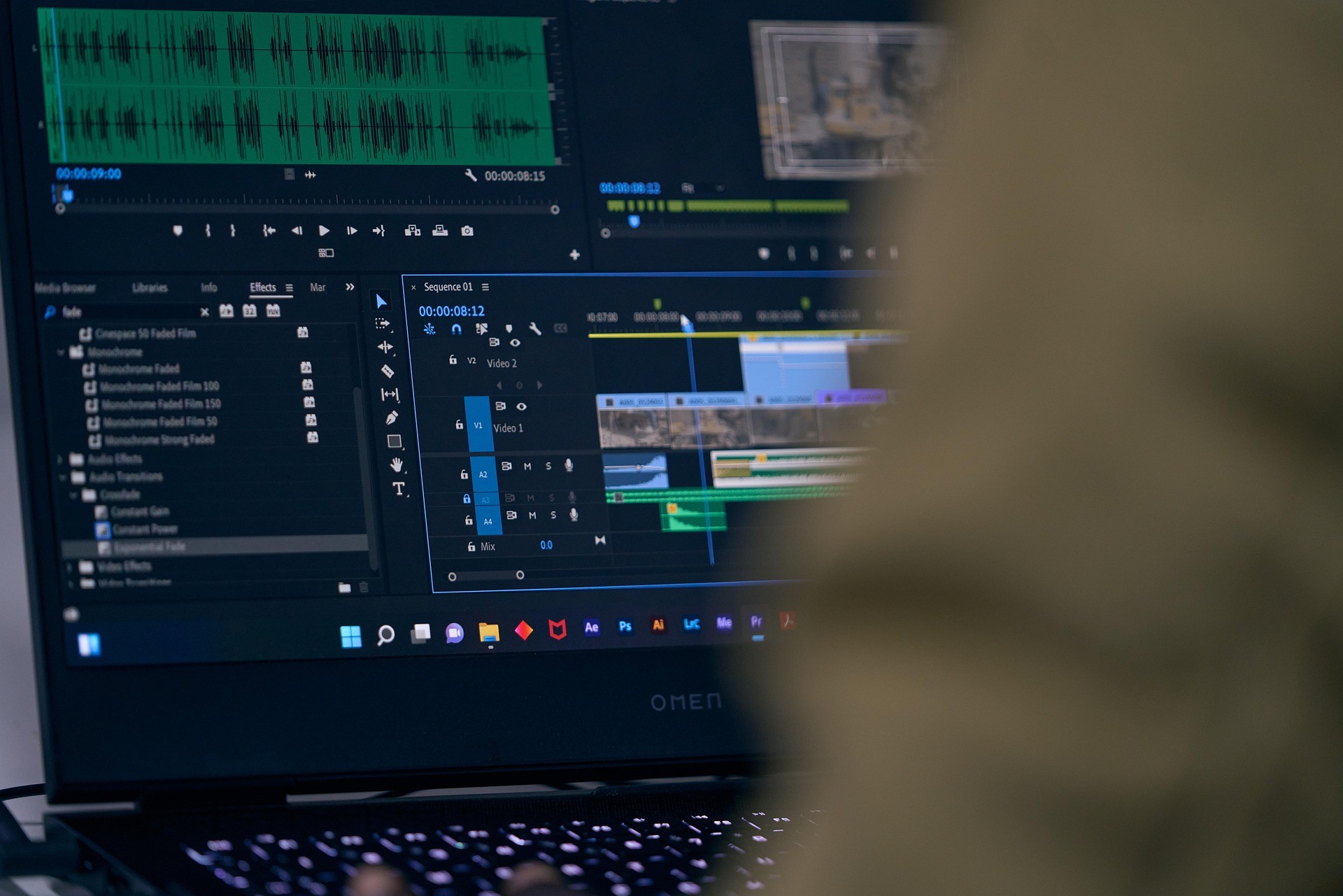
Visual effects are often associated with a specific stage of production: what happens after filming, when software and computer-generated imagery come into play.
But when the goal is to build a reality that doesn’t exist, VFX can become part of the creative thinking from the very beginning.
Their presence shapes how we imagine a scene, choose a location, design a camera movement, or decide which elements need to exist physically on set. Sometimes an image can be achieved entirely in-camera; other times, it requires a combination of practical and digital techniques. Often, the most interesting solution emerges when we stop treating these approaches as separate possibilities.
Thinking about VFX during the development of an idea means that technology doesn’t arrive at the end to solve a problem. Instead, it helps create something we might never have imagined otherwise.
Technology expands our possibilities, but it doesn’t replace creative intuition. Being able to do anything doesn’t mean everything is worth doing. The question remains the same: why does this image need to exist?


The Impossible Needs Something Real
Paradoxically, the more extraordinary an image is, the more interested I am in finding something that connects it to our everyday experience.
A surreal situation can lose its power if everything within it is extraordinary. Without a point of reference, the viewer stops recognizing a world and simply starts observing an effect.
That’s why I’m drawn to the combination of incompatible elements: an everyday gesture in an impossible setting, a mundane action amid an inexplicable event, or an absurd situation treated with absolute normality.
This tension is what makes an image linger in our memory. Not necessarily because it is spectacular, but because there is something about it we can’t quite understand.
VFX offers extraordinary tools for building these contradictions. But visual effects don’t always need to be the center of attention. Sometimes their greatest strength lies in going unnoticed, allowing us to accept, for a few seconds, something we know cannot exist.
Creating Also Means Knowing What Not to Do
Being involved in an idea from its earliest stages means understanding that the creative process isn’t just about accumulating possibilities, but also about ruling many of them out.
An image can become more powerful through simplicity, a scene can work better when it leaves things unseen, and a less ambitious solution can be more interesting than the technically more complex alternative.
In this sense, the relationship between creativity and production is essential. Understanding the practical possibilities of a project shouldn’t limit the imagination; it should help guide it. Anticipating needs and understanding the available tools allows us to find solutions that serve both the creative intention and the demands of production.
I’m interested in that space of collaboration where an idea is still open and different disciplines can transform it. When directing, production, cinematography, art direction, and VFX come together from the beginning, the result stops being a sum of separate departments and becomes a shared vision.
A Reality That Doesn’t Exist Yet
Creating a surreal universe doesn’t necessarily mean inventing something entirely disconnected from reality. Sometimes, all it takes is changing one of its rules.
A minimal alteration can transform our perception of a space, turn an ordinary object into something unsettling, or give an apparently normal scene an entirely different meaning.
That is the territory I’m interested in exploring: the point where an idea begins to become an image, where technique merges with intuition, and where production constraints become more than limitations—they become part of the creative process itself.
Because before the shots, the shoot, or post-production, there is one question worth taking all the time in the world to answer:
What image doesn’t exist yet, and what do we need to make it real?


Sources: